Pro Rata Take Home Pay Explained: How Much Will You Actually Receive After Tax?

When you work part-time, on a term-time contract, or in a job-share role, your salary is often calculated pro rata. But what does that mean for your take-home pay? Understanding your pro rata take home pay is crucial so that you can budget effectively, know your rights, and avoid surprises at payday.
In this guide, we explain what pro rata take-home pay is, how it’s calculated in the UK, and provide practical examples to help you understand exactly how much you will receive after tax.
What Is Pro Rata Take Home Pay?
Pro rata take home pay is the amount of salary you receive after deductions for income tax, adjusted for your actual working hours compared to a full-time employee.
For example:
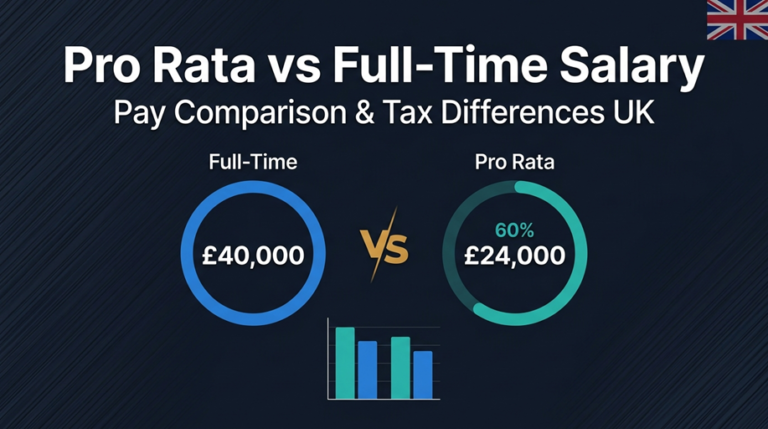
- A full-time employee earns £30,000 per year
- You work 60% of full-time hours (0.6 FTE)
- Your pro rata gross pay = £30,000 × 0.6 = £18,000 per year
- After tax, your take-home pay will be slightly less than £18,000
Unlike gross pro rata pay, take-home pay considers deductions, making it a more accurate reflection of your actual income.
Why Understanding Pro Rata Take Home Pay Matters
Knowing your take-home pay is essential for:
- Budgeting: Plan your monthly expenses accurately.
- Comparing Jobs: Compare full-time and part-time roles more effectively.
- Understanding Tax Liabilities: Estimate how much tax you will pay.
- Employment Decisions: Decide whether term-time contracts or job shares meet your financial needs.
How to Calculate Pro Rata Take Home Pay in the UK
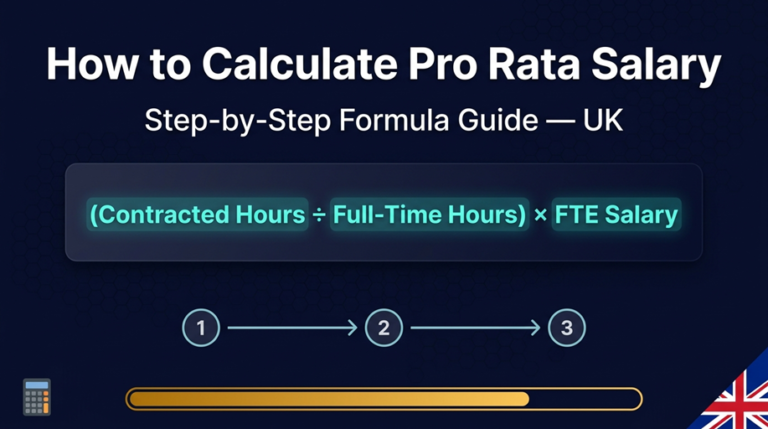
Calculating your pro rata take-home pay involves two steps:
Step 1: Calculate Pro Rata Gross Pay
The formula is simple:
Pro Rata Gross Pay = Full-Time Salary × (Hours Worked ÷ Full-Time Hours)
Example:
- Full-time salary: £36,000 per year
- Full-time hours: 37.5 per week
- Your hours: 22.5 per week
Calculation:
£36,000 × (22.5 ÷ 37.5) = £21,600 per year (gross)
Step 2: Deduct Income Tax
Once you have your gross pro rata pay, you apply UK income tax.
Income Tax Bands 2026 (UK)
- Personal Allowance: £12,570 (0% tax)
- Basic rate: 20% on £12,571–£50,270
- Higher rate: 40% on £50,271–£125,140
- Additional rate: 45% above £125,140
Pro Rata Take Home Pay for Different Work Scenarios
1. Part-Time Employee
- Full-time salary: £28,000
- Part-time hours: 20 hours/week (0.5 FTE)
- Gross pay: £14,000
2. Term-Time Teacher
- Full-time salary: £30,000
- Term-time months: 9 out of 12 → 0.75 FTE
- Gross pay: £22,500
- Take-home pay: ~£19,800
3. Job Share
- Full-time salary: £40,000
- Each employee works 50% → 0.5 FTE
- Gross pay: £20,000
- Take-home pay: ~£17,350
These examples help employees plan their finances, particularly when moving from full-time to part-time roles or when working term-time schedules.
Tools to Calculate Your Pro Rata Take Home Pay
While manual calculations are possible, online pro rata take home pay calculators UK simplify the process. Most calculators allow you to:
- Enter full-time salary
- Enter your part-time hours or FTE
- Automatically deduct UK income tax.
- See monthly, weekly, or daily take-home pay
Using a calculator saves time and ensures accuracy, especially for employees with variable schedules.
Common Questions About Pro Rata Take Home Pay
1. Does FTE affect take-home pay?
Yes. Your FTE directly affects gross pay, which then determines your tax, ultimately affecting your take-home pay.
2. Are part-time workers taxed differently?
No. Part-time workers pay the same income tax rates as full-time employees, but on a smaller gross salary.
3. How are term-time contracts calculated?
Term-time employees are paid pro rata based on the months worked versus the full-year full-time salary. Tax is applied in the same way.
4. Can take-home pay differ across regions?
Income tax rates are consistent across England, Wales, and Northern Ireland. Scotland has slightly different tax bands, so take-home pay may vary.
Tips to Maximise Your Take-Home Pay
- Check your tax code – an incorrect tax code may reduce your take-home pay.
- Claim allowable expenses – certain work-related expenses can reduce taxable income.
- Consider salary sacrifice schemes – pensions or childcare vouchers can increase net pay.
- Track overtime and bonuses – these are added to gross pay and affect take-home pay calculations.
Key Takeaways
- Pro rata take home pay is your actual income after tax, adjusted for your hours worked compared to full-time.
- Calculating it requires determining gross pro rata pay and then applying UK income tax and rules.
- Understanding your take-home pay helps with budgeting, job comparisons, and employment decisions.
- Using a reliable pro rata take home pay calculator UK ensures accuracy and saves time.
By calculating your pro rata take home pay, you gain a realistic view of your income, whether you’re working part-time, on a term-time contract, or sharing a job. Knowing this ensures you can plan effectively, make informed career decisions, and understand your financial position clearly.